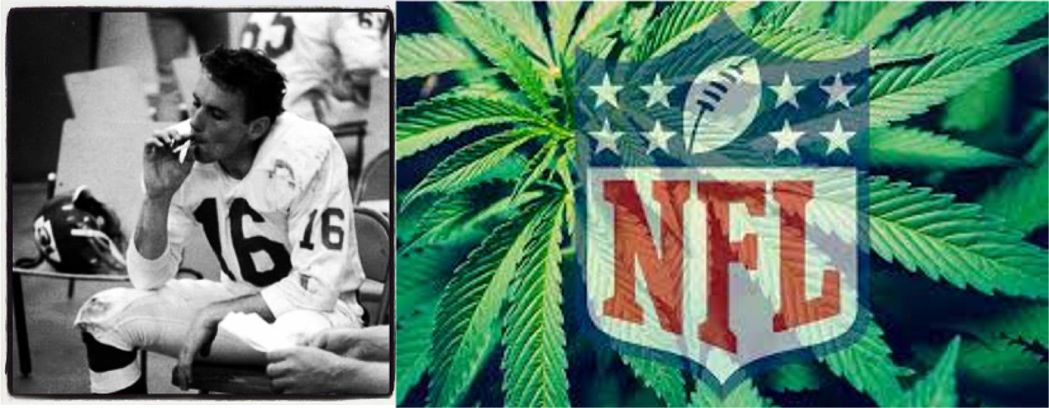
Source: 420 Magazine
Who is the quarterback from the KC Chiefs smoking a joint?
When Kyle Turley was selected with the seventh overall pick in the 1998
NFL draft, he was set along a path that is familiar to too many
athletes. After sustaining a leg injury while playing for the San Diego
State Aztecs in college, he had begun a regimen of painkillers,
anti-inflammatories and other pharmaceuticals that would eventually find
him adrift in a post-football existence defined by his relationship to
the pills he was constantly advised to take. After quitting these drugs
in favor of cannabis, Turley is now a new man, dedicated to helping
other athletes witnessing the same darkness.
What are the defining traits of the NFL’s cannabis culture?
It’s the same culture that we see in the concussion discussion, as well.
[The League] stands on grounds of ignorance, relying upon science to
give them the answers they need. But the only science they continue to
adhere to is science that they seem to have a vested interest in
controlling. They control their relationships with media and the
government in ways that allow them to operate in suspect manners as far
as giving information and being held accountable for giving false
information.
What do you feel the League can do to change that?
Much like the concussion situation, the cannabis discussion is just
another can they’re kicking down the road. To put it one way, while guys
are committing suicide and becoming addicted to pharmaceuticals they
don’t need - much of this revolves around the NFL’s stance of ignorance.
They continue to be a follower instead of becoming a leader when they
know they have some very important problems to solve. You have this
happening across the country because of sports. Period. Sports are fun
and there are a lot of great things that can be had from participating
in sports in general, but along with any sport comes athletic injury,
which is often very serious. Athletes often require surgery and
medication to deal with the pain. And right now they are only being
given one choice of medicine. These medicines can often be miraculous
for the things they can do, but in the long term they are highly
addictive. The truth about cannabis is there for the world to see. Our
position should be informed about this, to give cannabis as an option.
When did you first realize it was an option?
My second year in the NFL cannabis was introduced to me by another
player - a Hall of Fame player - and it gave me some of the same relief I
can still feel today. Dealing with the pharmaceuticals that had been
piling up since I blew out my knee in college and I had to have my first
surgery, I began to realize that all these pills just didn’t make me
feel good. They did a marginal job of dulling pain and inflammation
issues, but also did a lot of things to me adversely that I didn’t like.
I was going through the rigor of the NFL, being a rookie and
second-year player, having a lot of stress to deal with and losing a lot
of sleep over the demand of being a professional football player.
Unfortunately I was in New Orleans, St. Louis, Kansas City and then I
retired in Nashville, so I could only get [the cannabis] I could get
from my guy. That didn’t allow me to fully understand the plant, about
different strains and their different medicinal effects that I could
take advantage of.
Kyle Turley, by then playing for the Kansas City Chiefs, speaks during a
news conference at Mike Ditka’s restaurant in Chicago on November 27,
2007, where he presented a check, the equivalent of what he says he
earns per game, to an effort to raise money for needy retired players.
According to Turley, not enough of his fellow ex-NFLers are being
exposed to enough options to treat their myriad physical ailments - and
cannabis is part of the solution.